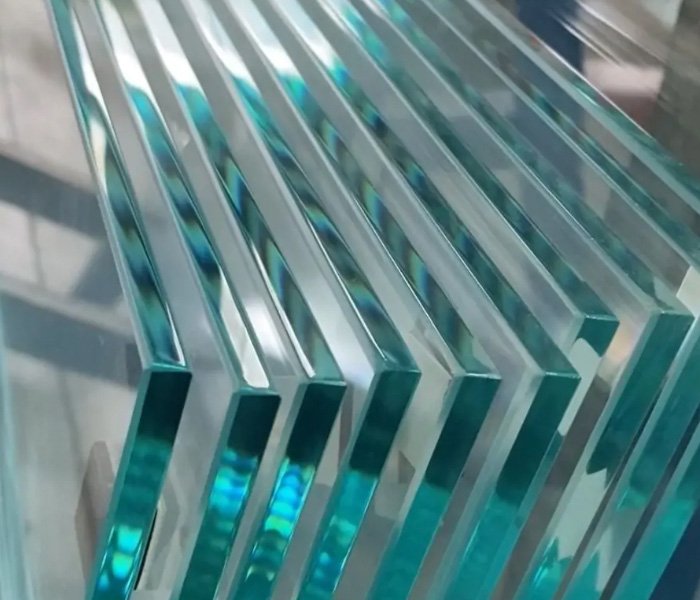
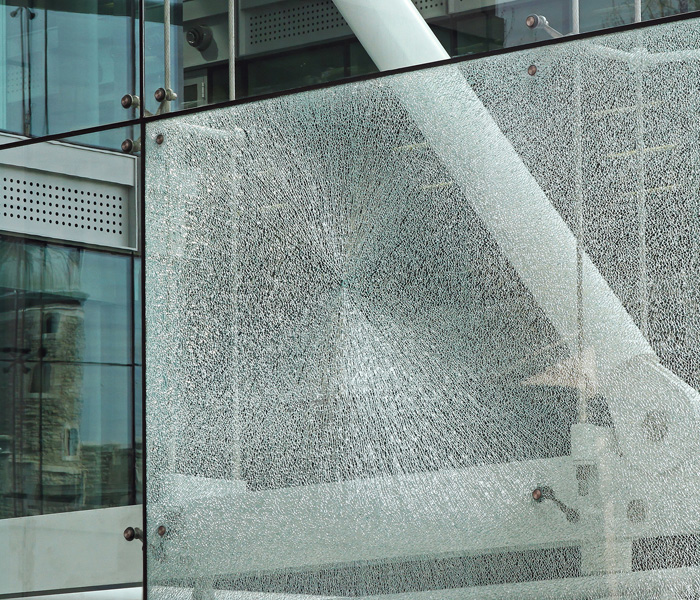
Also known as semi-tempered glass, heat-strengthened glass is produced through controlled heat treatment that limits the tensile stress of flat glass within a specific range, resulting in approximately twice the strength of ordinary glass. When broken, it tends to crack rather than shatter. Because the glass remains engaged within the frame, it provides time before replacement is required and helps prevent secondary damage caused by flying fragments. For this reason, it is commonly applied to building exterior glazing.
Tempered glass has approximately four times the strength of ordinary glass, resulting in a lower breakage rate. Even when subjected to impact beyond its limit, it breaks into small, blunt-edged particles rather than sharp shards, reducing the risk of injury from glass fragments. While ordinary flat glass may break with a temperature difference of around 60°C, tempered glass offers high heat resistance and can withstand temperature changes of up to 200°C, making it a safe and reliable glass option.